A new mark
Category /
news
DAte /
Read Time /
3
Minutes
Share
We design brands to last. For nearly a decade, our original logo did exactly that. But as our work transformed and our clients evolved, we simply outgrew our 2017 story. It was time to design the look for our next chapter. Meet our new mark.


Quiet in the wrong way
Our original logo was the perfect anchor for its time. Back in 2017, its translucent 3D form and soft, overlapping greyscale planes represented our pitch for connected design across web, brand, and product. The depth felt intentional.
But a lot changes in eight years. By 2025, the mark had grown quiet in the wrong way. The softness that once felt considered now looked unresolved. Ultimately, our work had sharpened—and it was time for our logo to do the same.
The clients changed first.
The studios we admire and the clients we do our best work today aren't building lifestyle apps. They’re building security infrastructure, AI systems, robotics interfaces, and health tools—products where every design decision carries real consequence.
As Webflow and Framer partners, we sit alongside platforms with precise, confident visual languages. Our mark needed to belong in that ecosystem without us having to explain it.
What we kept. What we changed.
We kept 3D. Depth and layering still make sense for what we do, reinforcing the idea that a great design system touches everything: product, marketing, brand, and sales. It’s one connected ecosystem.
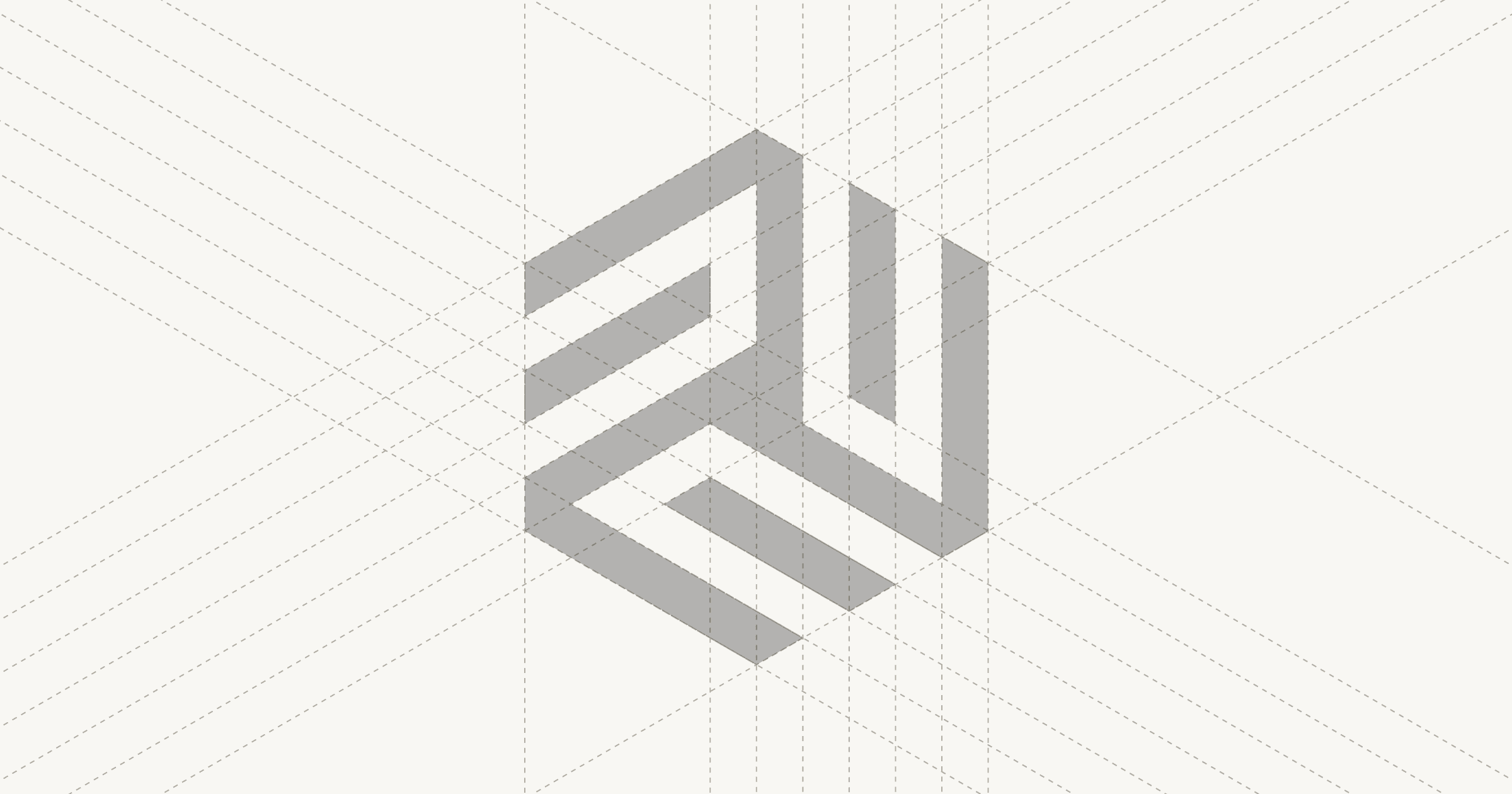
But we pushed that depth toward precision. The new form is built from clean, geometric line-work—resolved, three-dimensional, and highly structured. Inside sits a subtle, abstract ‘E’—readable as Ettrics on a second look, but a distinct mark first. This geometry also gives us an expansive visual language that effortlessly extends into patterns, dividers, and graphic textures across any touchpoint.


The small stuff is the real test.
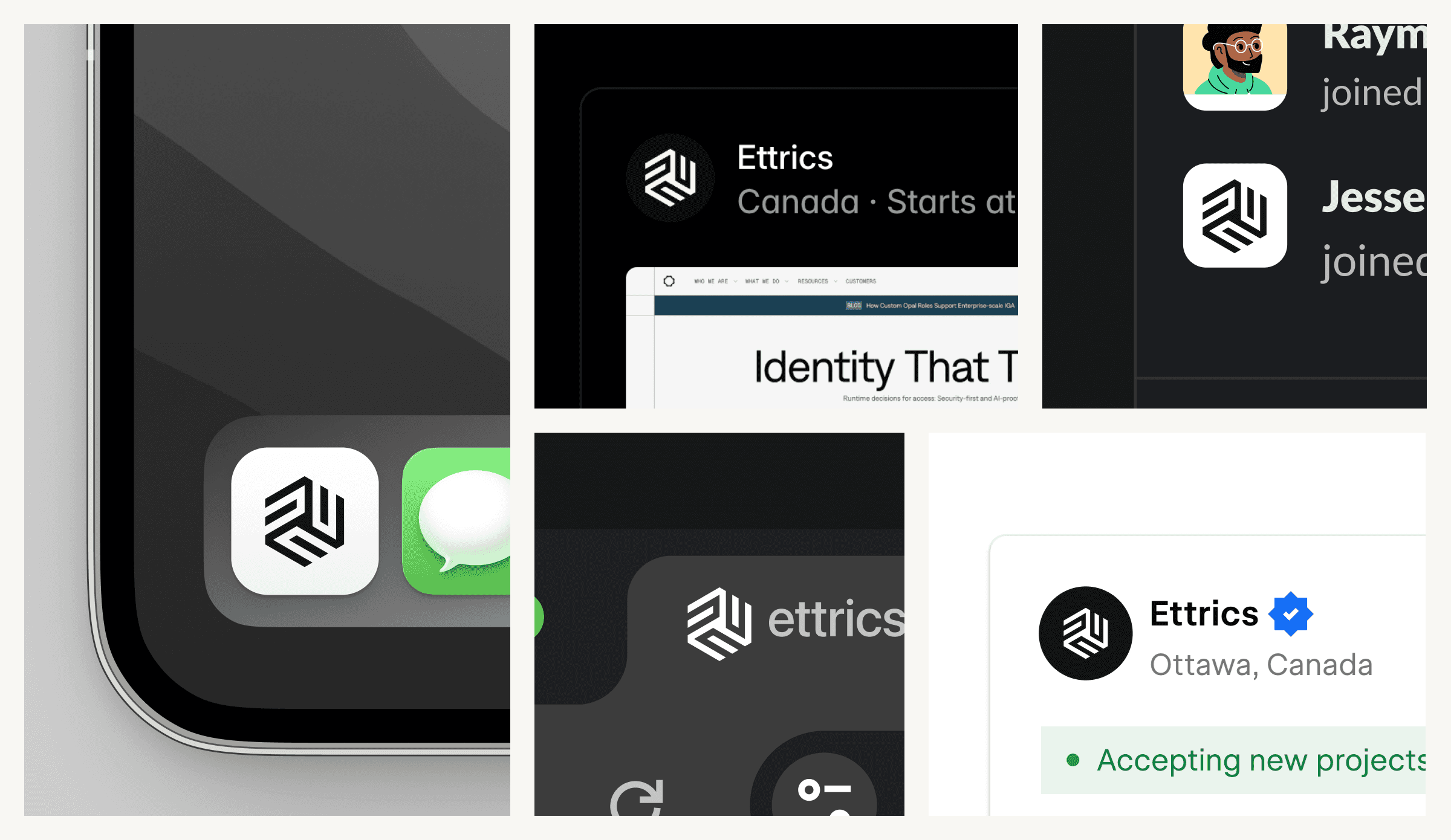
Does it hold up at 16px? Does it hold its own next to a partner logo? Does it work across a dark product UI and a white pitch deck?
We needed to ensure the new mark handles all of it. High-contrast monochrome is its native state, so it scales down cleanly without losing clarity. It’s build to fit into any digital environment without friction.
Same team. New chapter.
We mean it when we say the original mark got us here. It anchored us through nearly a decade of growth. But this new identity is built for the work we’re stepping into next, and the clients who are building the most interesting things in the industry right now.
More Articles